Category Archives: Power

1915: Thoughts on Armenian Identity from a 4th-Generation Outsider

The following post is about ambivalence and remembrance. It is comprised of unstructured vignettes, loosely tied with my thoughts on identity, family, and cultural legacy. These thoughts were inspired by the fact that today is April 24, and we are 100 years removed from the beginnings of the Armenian Genocide.

I am not an authority on the Armenian Genocide. I can only speak from my perspective as a fourth-generation descendant of someone who lived through it. There are numerous scholarly, pop, and fiction texts on the subject, as well as recent media coverage of the history and current issues surrounding remembrance. I encourage you to read widely. 


Here we are.

A century removed from the dawn of a genocide that massacred individuals, stolen family legacies, and endangered an entire culture.

Here we are. Here. Now.

We are.

We are, still.

The nation-state of Turkey does not publicly refer to the atrocities the Ottoman Empire committed against its Armenian citizens as genocide. It is public knowledge that this is a HUGE bone of contention for many Armenians & Armenian-Americans, and a sticking point in geopolitics. You may have read about it or heard about it in recent days on the news. I am glad this is getting media attention.

But I have come to realize that I don’t need a government to legitimize my great-grandmother’s lived experience and its continued effects on our family. That being said, I respect that many do need this, and I understand why they do. Recognition, admission of ancestral wrongdoing, is critical to healing. It gives a lot of power over the truth to governments, but that is the world we live in.

The Bastard of Istanbul in Armenian

I read this in English, obviously.

The thing that struck me about The Bastard of Istanbul (a novel whose disturbing reveal you can, to your mounting horror, see coming a mile of alternating-perspective chapters away) is that some modern-day citizens of Turkey might not know about this part of Ottoman-Armenian history, and thus have no simmering feelings or opinions about it. In this particular novel, when Turkish characters hear the story of an Armenian character’s ancestors, they are horrified and sympathetic. But this is the first they are hearing about what was a systematic eradication of an ethnic/cultural group.

Their ignorance shrouds truth. Their ignorance leaves no place for Turkish denial, for Armenian insistence, for indigence or entrenchment on either side. This ignorance is the fault of the state, not the individual. So it is the nation-state, not its people, that become the important players in the geopolitical and ethnic and cultural narrative. This politico-narrative reality is why so many Armenian-Americans are disappointed–if not angry–with President Obama, and thrilled with Pope Francis.

The Brand Library in Glendale has been hosting events, exhibitions, conversations, film screenings, for months now to mark the 100th year of survival. Several times I have been compelled enough, felt enough of a sense of duty, to put these in my calendar. Each time I did not go.

What is it that keeps me from participating? Keeps me from showing up?
Part of it is my dwindling ties to my Armenian heritage, and by extension any entree into the Armenian community. I feel embarrassed at the prospect of going up to someone who seems to embody and/or perform the authenticity I lack and claiming ancestry. They would know I was a phony. And yet, what is authenticity? Am I not authentically, ethnically part Armenian, Americanized to a fault and distanced from “old country” culture by 4 generations and current Armenian-American culture by virtue of not participating in it? That is my authentic embodiment of Armenian identity…or lack thereof. Having confidence in that particular identity around those who, in my mind, are more authentic and worthy of Armenian identity, is the sticking point.
Mother and daughter

My grandmother, Sona, with Vartouhi (Nana)

My grandmother is gone, her mother is gone–no one is left to show me the way.
I thought attending these comfortably anonymous events would be a different way in–an acknowledgment to myself that I could at the very least learn more. Hear what those who are involved in the diaspora community, who are immersed in Armenian-American culture, think and feel. But I did not go. A ceremony was held for the new memorial in Pasadena, and I was not there. There will be a parade today that I do not attend. I am afraid to impose, afraid to feel like an impostor. I have no right to participate. I have little knowledge and have paid no dues–I am not tapped in to the community.

My great grandmother’s name is Vartouhi.  Her story is not unique. I will probably get some details wrong, even in this brief sketch. She fled from Turkey to America by way of marrying an Assyrian whose family was harboring her. She had managed to smuggle Uncle Arto (dressed as a girl), and Auntie Bergie, who she pretended was her daughter. Their parents had been killed as they watched. Too many children could say this by 1920. Too many children can say this now. Once in Washington Heights, an older brother and extended family awaited them and they made a new life. My great-grandmother had two children, worked, divorced, sent her son to war and her daughter to work and got her son back and eventually they all moved to the San Gabriel Valley to start yet another life. Lives. Our family branched and grew. Vartouhi had escaped genocide and created a legacy.

Two Armenian women in the 1980s

Auntie Bergie (L) with Nana (R)

In the early 1990’s, she sat in one of her favorite chairs in her sunny Pasadena living room and her son video taped her story. I have seen it just once, a few years back. It was strange and wonderful, to see her as I remember her at eight. To hear her voice. She and her story and its transmission and retelling and reinterpretation by my grandmother & mother are the reasons I became politicized around my Armenian identity when I was younger. That she and my grandmother are gone have lessened the immediacy of our family’s past, and have made it easier for me to become alienated from this identity over the years.
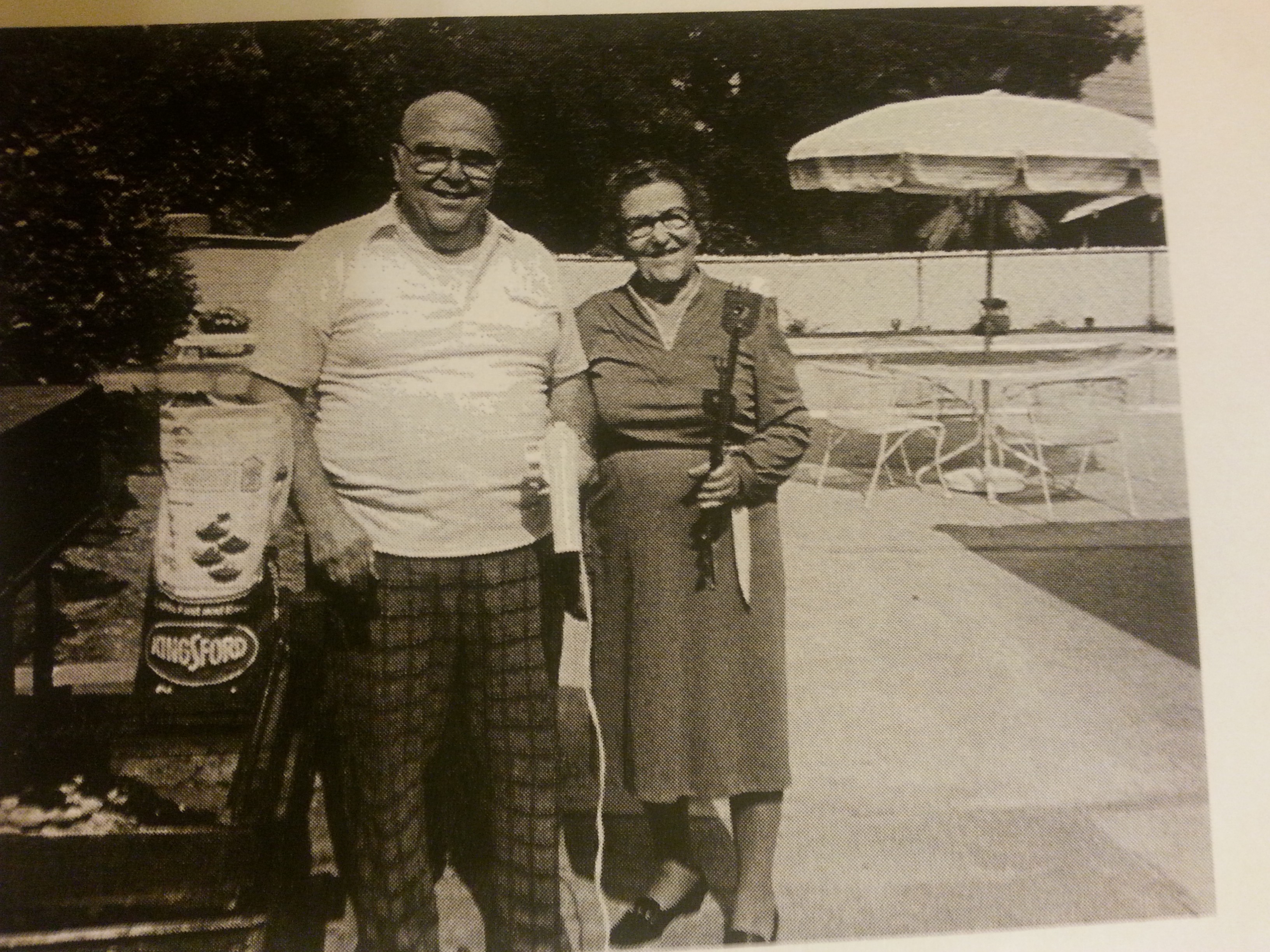
Armenian mother with son at BBQ

Uncle Al with Nana, engaged in a family activity.

My grandmother helped me share our family heritage in 5th grade–it must have been some sort of Grandparents Day or Immigration Celebration or something similarly and singularly Elementary School. We held up a scroll of the Armenian alphabet, unwrapped my grandfather’s Christening gown, and we must have talked about things, as well. Maybe this was the beginning of my blossoming pride. In my early teens, I claimed Armenian identity in earnest. It made me special. If I had lived in Glendale or near Washington Blvd in Pasadena, it would have been less special, but maybe I would have participated in the diaspora community and be able to feel legitimate about claims to an Armenian identity today.

The Road from Home by David Kherdian

One of my touchstone texts as a teenager struggling to claim Armenian identity.

At 13, I had grand aspirations of learn in to speak the language. I could have–my grandmother was still alive, as was her brother. I read The Road from Home by David Kherdian over and over, book-reported it in English class, told anyone who would listen that I was half Armenian. Looking back, I label myself “obsessed.” In 9th grade, I wrote an abbreviated history, complete with choice gory details, for an extracurricular publication. It drew heavily on a hardback book with a blue cover called The Armenians (I think)–a sweeping history that chronicled the horrors of the genocide. My goal was to shock readers and inspire guilt. It was amateur stuff, fueled by the fire of teenage understanding and the desire to be recognized as something deserving of recognition. My identity was the peg. I’m still glad I wrote about it. I would write it differently today, of course. I’m older. My relationship with my Armenian identity has changed from one marked by pride to one marked by unease.

If you do the math, I am fractionally Armenian–there’s also some Assyrian in there. Every time I try to come up with the actual fraction, I get a headache. “Half” is the default, but it’s probably closer to 3/8. Ethnically, I can claim this Armenian identity. Culturally, this claim rings blatantly false. The last thing my family has are memories and a few recipes we trot out during holidays. Our food is freaking delicious, by the way. We consider Armenian restaurants inferior. They don’t work from Nana’s (Vartouhi’s) recipes, which were kept in her head until the 80’s when a cousin and my mother tried to transcribe what, exactly, “this much” measured in the pinch of her fingers meant.
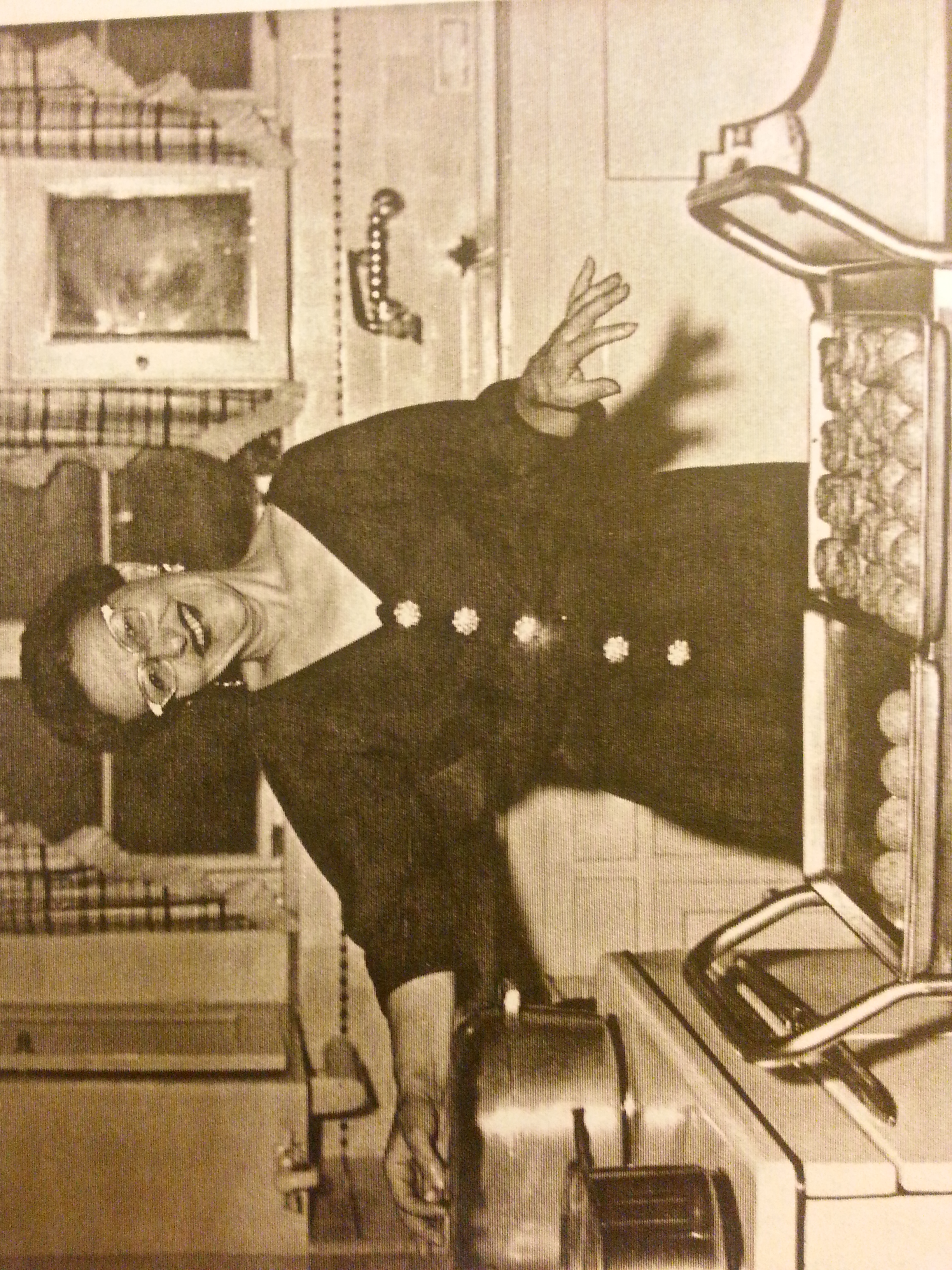
Armenian woman making kufta

Nana preparing for a Kufta party in the 1950’s

So we don’t use recipes, really. We use what’s in our heads. Each grandchild took responsibility for one dish. One year someone joked that we should consider sharing what has become compartmentalized knowledge & expertise among ourselves. We should probably take this seriously. An Easter without Choereg is no Easter at all, and I don’t even like Choereg. As my generation scatters, the branches of our family unite less frequently. As we Americanize, we share a love for the family food and identify as eaters, but that seems to be the extent of our heritage. Who are we? There are few left who truly remember.

Some of my relatives are still angry. It’s personal. An affront to our family. I used to have this anger, but it has waned. It’s become less personal for me–I didn’t have as much time with the people the genocide affected directly. As the years pass and my experiences with my relatives slip farther from the present, it’s easier for me to think about larger contexts. I’m not sure how I feel about my ability to detach. Certainly I lament my removal from those I love, from the immediacy of experience and into the fading haze of memory.

It’s not my place to forgive.

20 Comments

Filed under Contemporary, Historical, Power

Impotent Signage: Discouraging Garden Theft in the Modern Suburbs

The two poster-boards shout at passers-by in clearly printed black marker. The signs are duplicates of one another, affixed at angles to a tree on a front lawn. The tree is set back far enough from the curb to not be mistaken for a city tree. Crucially, at the base of this tree is a neatly rounded pile of river rocks. At first glance, there are too many rocks to count. But the owners of the tree seem to keep close tabs on the total.

...make me?

…make me?

How I long to call on these people in a week or two and find out if they have seen an increase or a decrease in theft since they put up the signs.

For the signs to work as intended–as a deterrent against further theft–a few things have to happen:

  1. Potential and/or previous rock thieves need to come to the house
  2. Those people must be interpellated (that is, they must consider themselves addressed by the sign and identify as the intended audience of this sign’s imperative message)
  3. They must then feel remorse for their previous or intended actions
  4. They must not feel indignant, as that may lead to rebellion against the sign’s message

That you can see it from the street does not make it public; that you want it does not make it yours; that there are so many to begin with does not change the situation from the owners’ point of view.*

All of this being established, my inclination is that anyone who already feels it is their right to take something from someone else’s lawn will scoff at this feeble attempt to control their behavior and take more rocks just to spite the sign and the passive-aggressive people who wrote it.

I could be wrong. The four steps outlined above may happen. But until these rock owners get a security camera and law enforcement on their side, I do not think their rocks are going to stay put. Not with this futile sign as their only anchor.


* That I took a picture of what these people clearly consider to be their sole property is an ethical grey area, although not getting paid for this piece of writing nudges me more firmly on the “no worries” side of things.

1 Comment

Filed under Contemporary, Power, Wordplay

Freeway Soundwalls as Markers of Affluence

Riding the Metro Goldline along the 210 and 110 freeways of LA, through the many communities it borders and cuts through, it struck me that rich neighborhoods get soundwalls. Poorer neighborhoods get traffic noises. To illustrate this (obvious) point, contrast the route the metro takes through South Pasadena (soundwall! slowing to a crawl!) with that it takes through Highland Park (chain-link fence if you’re lucky!). It is the richer neighborhoods that have the resources to devote to noise complaints. To getting their petitions recognized. These resources can be withheld from the city, the state, by those wealthy citizens if their demands are not met.

To be sure, communities who are not affluent can get soundwalls built, too, given the drive to get organized and a sympathetic power structure. Money is not the only resource–time is another valuable one when it comes to making voices heard. And sense of community ownership, civic pride, etc. But I’d venture that the vast majority of soundwalls are lobbied for by those communities with the financial resources to have leverage against the powers-that-be. Give us that soundwall, or we’re not underwriting anything. You can forget our endorsements during election season. You can kiss our donations goodbye. We want our acoustic insulation, and you’re going to give it to us. We have property values to think about.*

So the noises get shifted to the monetarily voiceless. The disenfranchised without the time or money to devote to standing up for the sanctity of their neighborhoods. And they get even more run down, comparatively, as a result. The gap widens with rows of cinderblock…or lack thereof. The acoustic insulations mirrors the social stratification, the physical isolation of certain classes of citizens from others. From Others.

Who speaks for the poor? And who has the right to?

—–

*Maybe it has something to do with the ratio of renters to owners.

Leave a comment

Filed under Contemporary, Power, Sweeping Generalizations

The 2011 Protester and Occupy Movement Uptake

A few weeks ago, Time magazine revealed its Person of the Year (a trope that has gained a lot of self-aggrandizing authority over the years as a touchstone of the state of the world and America and all that) to much mass-mediated fanfare. It was The Protester. A masked one. The image was a little sinister. To scare the white “normal” American public that reads Time and takes it seriously.

Who is the “protester” for Time, anyway? The cover is confusing and exploitative, simultaneously raising up and trivializing and making a public menace actual protesters…and differently for different audiences. How to even think about this?

Now, to be fair, the story that goes along with the cover is a little more nuanced and gives good space to the revolutions of the Arab Spring, but the protester on the cover image seems to be more of a young American anarchist.*** And readers should fear this anonymous being with its dark eyebrows and hand-knit cap and bandana-hidden face standing in front of a red back-drop, ready to charge at your magazine-reading self. That protester is going to set fire to your lawn and ask about social justice. RUN!!!

The cover of “Time” magazine for the week of December 26th 2011/January 2nd 2012

Time‘s “Person of the Year” (the protester) was being reported by local and national news websites, TV stations and radio stations as if this yearly revelation were news, but Time magazine itself purports to be news. How incestuously layered, congratulatory, and self-promoting. Its own advertisement. Making itself an event by framing itself as such and getting other news outlets to do the same. Saying it makes it true: yay, performativity! We (some of the “normal” public and the mass media it listens to) wait with bated breath to find out who Time thinks is the person of the year, thus giving it the authority to say with definity who it is.

Not news at all, but another way to sell more magazines. Capitalizing on the major mass-mediated news stories of 2011 (the revolutions big and small, international and local) by turning it into another mass-mediated message. And the “normal” public eats it up. Or at least is exposed to it over and over.

The “revolution” has been televised. And thus, the real revolution has been largely silenced in terms of how many “normal” ears its message falls upon. Its message, its narrative, was co-opted almost immediately by those in power, those of the establishment, those of the mass-media. The mass media, after all, is where most “normal” Americans go for their answers, for their news. What “normal” person has time for much else than those neat little soundpicturebites? They trust the familiarity of the mass media–not the chaotic voices of those in the trenches.

It is difficult to say with any certainty how these mass-mediated messages are received by the “normals.” But since many of them seem to fill their conversations with regurgitated sentences and viewpoints heard and read from mass-mediated news sources, I feel it safe to say that they take up much of the repeated narratives without a lot of questioning. They believe the mass-mediated narratives of what’s going on around the world. Their opinions are not their own. (And in a society that is ostensibly all about the unique and sovereign individual, that would seem to be a problem, wouldn’t it?)

And in this mess that is the ownership of narrative, who speaks for the actual protesters? The varied ones that the image on the cover of Time is supposed to represent. The “normal” public certainly does not let them speak for themselves. Not for long. (It could be argued that at first, the Occupy movement really did change the conversation, or at least brought more attention to the massive dissatisfaction Americans were feeling about the state of the nation and their own lives. The mass media even seemed sympathetic with the movement at first. But then it went on too long. It got bored and started reporting it from the perspective of the 1 percent that owns the news outlets. The conversation went back to the status quo, and the movement lost its ability to speak for itself to the “normal” public, at least through the mass mediated outlets that many of the “normals” turn to for guidance. Turn to to make sense out of what’s going on. Turn to to find out what’s going on, even if it isn’t. Even if they leave a lot out.)

No, the “normals” prefer the mass media to wrap up the complicated messages in easily digestible sound-bites of recognizable size and flavor: Crazy hippies. Bored rich kids. Rioting poor people. Naive college students. Uppity and inarticulate African-Americans. Dangerous and dirty transients. Entitled Native Americans. Basically, everyone who’s not falling into line. Not playing by the white, upper-middle-class rules.

The Occupy movement is doomed (assuming they want to affect change on a scale larger than themselves) if the “normals” keep listening to the mass-mediated take on what’s going on and investing these sources with the authority to speak for the movement. If the “normals” keep tuning out what the people on the ground, the actual protesters/members of the movement, are saying. If they keep letting the media speak for the many complicated and different individuals on the ground trying to call attention to the many issues our large society has. It’s easier to think that these issues don’t exist, or that they can be solved by placing even more stock in the status quo. It’s easier to listen to the mass media.

We really do have an impressively strong hegemony here. We think we’re free, that our society is  free, but the minute someone questions the status quo, the citizen police are out in force, squelching the questions with blindly accepted structure. This is the way things are; get a job. Stop ruining city hall’s lawn. We’ve decided it’s time for you to stop questioning the status quo: stop protesting and go home.

Because it’s not 99 vs. 1. The 1 may have all the money, but most of the 99 are helping to keep the structures that allow for the rich 1 to exist strong. Many of the 99 believe so deeply in those structures that they cannot see them–these structures have become naturalized: it’s just the way things are. And we must all operate within this system if we are to keep on keeping on, never mind get ahead. And this deep-seated belief in the invisible structures is one of the reasons the Occupy movement is in so much trouble. They aren’t speaking for the 99; most of the 99 are unwittingly in cahoots with the 1.

The Occupy movement can’t gain traction without the “normals” who are (now half-heartedly if at all) gazing in on them either listening seriously or joining. And the “normals” won’t do either when the messages of the movement have been co-opted by the mass media. As a closeted radical on the outside of the movements that are happening around the country, I feel (ashamedly) more in touch with the perspective of the “normals” than I do with the movement that I politically and socially identify with. So allow me to speak a little for them (they have no problem at all speaking for you, after all, and you won’t like what they say).

The normals hear what the media says about the movement and lets the media speak for it. The movement is too “radical”, too “disorganized” for them. “What do they want? If they just had an agenda…/Why are they wasting time holding up signs when they could be out looking for jobs? Why do they hate America?” etc. For the movement itself, I think it’s great that it’s somewhat lacking in clear leadership, instead thriving on some disorganization, anarchism. It seems invested in listening to everyone’s concerns. But for things to change–or for the national conversation to permanently change in any meaningful way–the movement needs the “normals” on board, and the “normals” like the very structure that the movement is trying to question.

Which leaves us at a stalemate. What kind of strategy can overcome this divide? Can we look to the relative successes of the revolutions of the Arab Spring for any tactics and strategies that can be adopted for our own cultural context? How can the movement get the “normal” public to join them in a conversation that isn’t mediated by the mass media? Is that even possible?

Where do we go from here?

***A Tardy Update: a link and a digression into self-critique***

Over at Al Jazeera, Larbi Sadiki has a different interpretation of the Time image as he deconstructs its many meanings. The various issues and details he points out are interesting and I think the piece is worth a read. He also pays attention to the fact that the image on the cover “veiled” the protester, and what implications that visual choice has, given the climate we live in and the many conflicting associations veiling has in the Western world (not to mention the cultures that actually wear variations of a veil).

Perhaps I’m implicitly guilty of demonizing the veil in my own interpretation when I talk about the image as a “scary” one of the hipster-anarchist…for which I apologize. That was not my intent, but it nonetheless points to the negative associations our culture has when it comes to images of people with their faces partially or fully obscured. Veils, burqas, bandanas and the like shouldn’t be signs that incite fear, because then this fear is displaced onto the person wearing these pieces of fabric and can often, as Yoda taught us, lead to hate. But for many Americans they are signs that incite fear. And when I interpreted the visual cues of the Time cover in this way, I was tapping into that negative stereotype that has been harmful to particular populations, especially post-9/11. Even though the dark red cover is also a menacing sign, I do believe I was wrong to not see that the image, as Sadiki points out, is also one that indexes Americans’ fear of cultures and populations who wear variations of a veil. I apologize for my insensitivity.

All of which goes to prove that meaning is located in the one who does the interpretation, not necessarily the one who produces. Intention has little weight. Uptake! Use! How can we determine what the producers of this image intended it to mean when there can be such radically different interpretations of it? Obviously, the producers of the image operate within the same systems of symbols that allowed for both Sadiki and my interpretations of it…but it is difficult to critique them without knowing which (or both?) the producers meant to “speak” to their readership. Either way, both of our interpretations find it problematic that the image contains overwhelmingly negative signs that cause the (white?) American viewer to call up culturally negative associations.

And I’m going to stop before this discussion spirals out of control in a vortex of fractally circular argumentation.

1 Comment

Filed under Contemporary, Media, Power

In solidarity with the Occupy movements

May I never stop drawing attention to the systematic socio-economic inequalities in the world. In whatever small ways I can. Silence just exacerbates the injustice and violence: both physical and epistemic.

We have to keep talking and doing. We can’t just let this go. And I will try to do my part, here and elsewhere.

Leave a comment

Filed under Contemporary, Power