Category Archives: Sweeping Generalizations

A Case for Applied Anthropology: Let’s Get Personal


In honor of the first National Anthropology Day, I’m going to jump on the bandwagon and write something anthro-related. Or rather, type something anthro-related that I scribbled down in a tiny notebook nearly 2 years ago. 

Imagine, if you will, that it is spring 2013. I’m headed back from the first of a two-day conference of California Cooperatives. I’m neck-deep in a sustained effort to start a community-owned grocery store. I’ve just landed a dream job working with and for people two generations ahead of me at a local non-profit.

My days of suffering through thankless customer service jobs are over. I’m high on collective action. I’m still livid about my graduate school experiences & failures. All these feeling coalesced in a frenzy of brain-waves. The following are the thoughts I rushed to get on paper every which-way as I metroed back from the church basement in Los Angeles where the conference had holed up, ravenous for the life I was experiencing as well as a proper dinner.
—
Applied anthropology gets a bad rap. Partly for fair reasons, but I’m here to talk about things we don’t think of when those who have the luxury of working the ivory tower use the term pejoratively.

Full disclosure: I am making this case partly as a way to defend the work I do as a natural and positive way to use my academic training.

I consider the work I do to be applied anthropology. Not this blog, which is armchair anth to a fault, but my real-world work. I have the great fortune of being involved in the following projects:

  • At a local history museum, I’m collecting and curating personal memories as part of a virtual exhibit of community stories. Last year, I re-wrote a docent training manual to make room for those groups discursively erased from dominant historical narratives.
  • I am contributing to the start-up phase of a food co-op.
  • I’m working for a non-profit that creates a support network enabling people to stay in their communities of choice as they age.
One of these projects pays me, but I spend arguably more time on the volunteer projects. All of them are local and community-oriented to some degree. And in everything I do for them, I apply my anthropological lens. My training informs my work.

I use the tools and perspectives of cultural and linguistic anthropology to navigate all of this work. I don’t consider this “selling out,” and while it may be an impure form, I do not see it as a bad thing that I’m using the knowledge I and others (have) produce(d) to do very real things. To effect the type of social change we anthros always seem to be advocating for.

I suppose that makes me an activist anthro–another pejorative term. I’m working with folks to address and solve the social problems that anthropologists are so good at identifying. There may well be harm in this endeavor, but there is also a great deal of good.

For example, I use linguistic anthropology for good, not evil. Yes, I’m referring to marketing, but this is marketing for a better future! I haven’t sold out to a corporation, here (unless you count the food co-op). I’m taking the collective will of the people and packaging it for even more people. “Selling” folks on the very ideas they helped to create.

But that’s not what people mean when they snark at those of us who aren’t masochistic enough to be in a PhD program. I admit that I don’t have the temperament to hack it. I’m not into feeling overwhelmed and mentally inferior. I’d much rather be fulfilled, using my skills to engage with my local community and make it a better place.

10170962_624799674378_6831831824286245919_n

Collective production of paper mache’ floats trafficking in mixed metaphors totally makes the world a better place.


All of these are reasons why I like the CCC’s better than the AAA’s. There’s a commitment to putting theory into practice. Turning idealism into action and ideology into reality at a grassroots level. Joining pragmatism with idealism to forge unstoppable forces for good in the world!

Besides, if we sequester ourselves in the ivory tower, if we don’t retain ownership of the knowledge we’ve produced, it has a higher risk of being co-opted and used for evil, rather than the good we intend. There’s nothing shameful in seeing something through, in applying theory to practice.

What’s the point of research if it doesn’t have real-world implications? And who are we if we don’t see the value in implementing those implications of our research?

Instead, let’s embrace the practical applications of our research. Let’s retain ownership–sharing the burden, to be sure, with those who have the experience and power to implement our ideas. Not just handing it off, but sticking around to be active participants. Taking action!

—

In the two years since this breathless tirade against academia for poo-poo-ing applied anthropology, I’ve mellowed a bit. My involvement in the museum and the co-op has lessened, and my work in the non-profit world, while still rewarding, is definitely work. I’m not quite as bitter about my negative experiences in graduate school, and instead enjoy gazing through nostalgia-tinted glasses at the wonderful undergraduate experiences that drew me to anthropology in the first place.

There is peace. There is still action. The museum endures. The co-op is open, now, thanks to the efforts of many talented people. There is still a case for applied anthropology.
 

Leave a comment

Filed under Contemporary, Sweeping Generalizations

A Preemptively Curmudgeonly Prediction

Given the number of young people today who rarely look up from their electronic devices when in the presence of other people, and the lack of parental figures saying “hey, turn that off,” it would not be at all surprising if in the near future, this type of scene were no longer considered rude. Digital/electronic communication would gain primacy and precedence over face-to-face interactions. Tending to one’s far-off acquaintances via a mobile device would be prioritized over tending to one’s here-and-now relationships. Indeed, would the very meaning of “here and now” change, or merely be transferred over to those relationships that exist in the ether? Will anyone look at one another in the future? Will that be rude? Existence will be acknowledged primarily through electronic/digital/whatever-they-think-of-next media.

In the interest of forestalling evil cultural change and saving the hug as we know it, we must either institute some serious programs to teach kids-these-days some goddamn manners, or somehow stop them from gaining power and taking over society as they are destined to do like every generation before them. Hell in a hand-basket, I say! Who’s got an immortality pill?

“Hey, you damn kids! Look at me when I yell at you to get off my lawn!”


1 Comment

Filed under Sweeping Generalizations, Technology

Freeway Soundwalls as Markers of Affluence

Riding the Metro Goldline along the 210 and 110 freeways of LA, through the many communities it borders and cuts through, it struck me that rich neighborhoods get soundwalls. Poorer neighborhoods get traffic noises. To illustrate this (obvious) point, contrast the route the metro takes through South Pasadena (soundwall! slowing to a crawl!) with that it takes through Highland Park (chain-link fence if you’re lucky!). It is the richer neighborhoods that have the resources to devote to noise complaints. To getting their petitions recognized. These resources can be withheld from the city, the state, by those wealthy citizens if their demands are not met.

To be sure, communities who are not affluent can get soundwalls built, too, given the drive to get organized and a sympathetic power structure. Money is not the only resource–time is another valuable one when it comes to making voices heard. And sense of community ownership, civic pride, etc. But I’d venture that the vast majority of soundwalls are lobbied for by those communities with the financial resources to have leverage against the powers-that-be. Give us that soundwall, or we’re not underwriting anything. You can forget our endorsements during election season. You can kiss our donations goodbye. We want our acoustic insulation, and you’re going to give it to us. We have property values to think about.*

So the noises get shifted to the monetarily voiceless. The disenfranchised without the time or money to devote to standing up for the sanctity of their neighborhoods. And they get even more run down, comparatively, as a result. The gap widens with rows of cinderblock…or lack thereof. The acoustic insulations mirrors the social stratification, the physical isolation of certain classes of citizens from others. From Others.

Who speaks for the poor? And who has the right to?

—–

*Maybe it has something to do with the ratio of renters to owners.

Leave a comment

Filed under Contemporary, Power, Sweeping Generalizations

On the Superiority of German Playgrounds: A Photo-Essay with a Dubious Argument and One-sided Evidence

During recent travels in Northern Europe (please excuse the pretentiousness) I was taken by the variety and creativity of German playground equipment. It struck me how hideous (okay, so that’s a subjective aesthetic evaluation) and clone-like the playgrounds in the U.S. tend to be. Cookie-cutter jungle-gyms, swing sets, and slides. Not much that feeds the imagination. They are getting better, but they still have a ways to go if the goal is a magical land of outdoor play-time. Feast your eyes on these German examples and see if you don’t agree that we could learn something about incorporating whimsy and general awesomeness into our parks designed for children.

First, a relatively simple one:

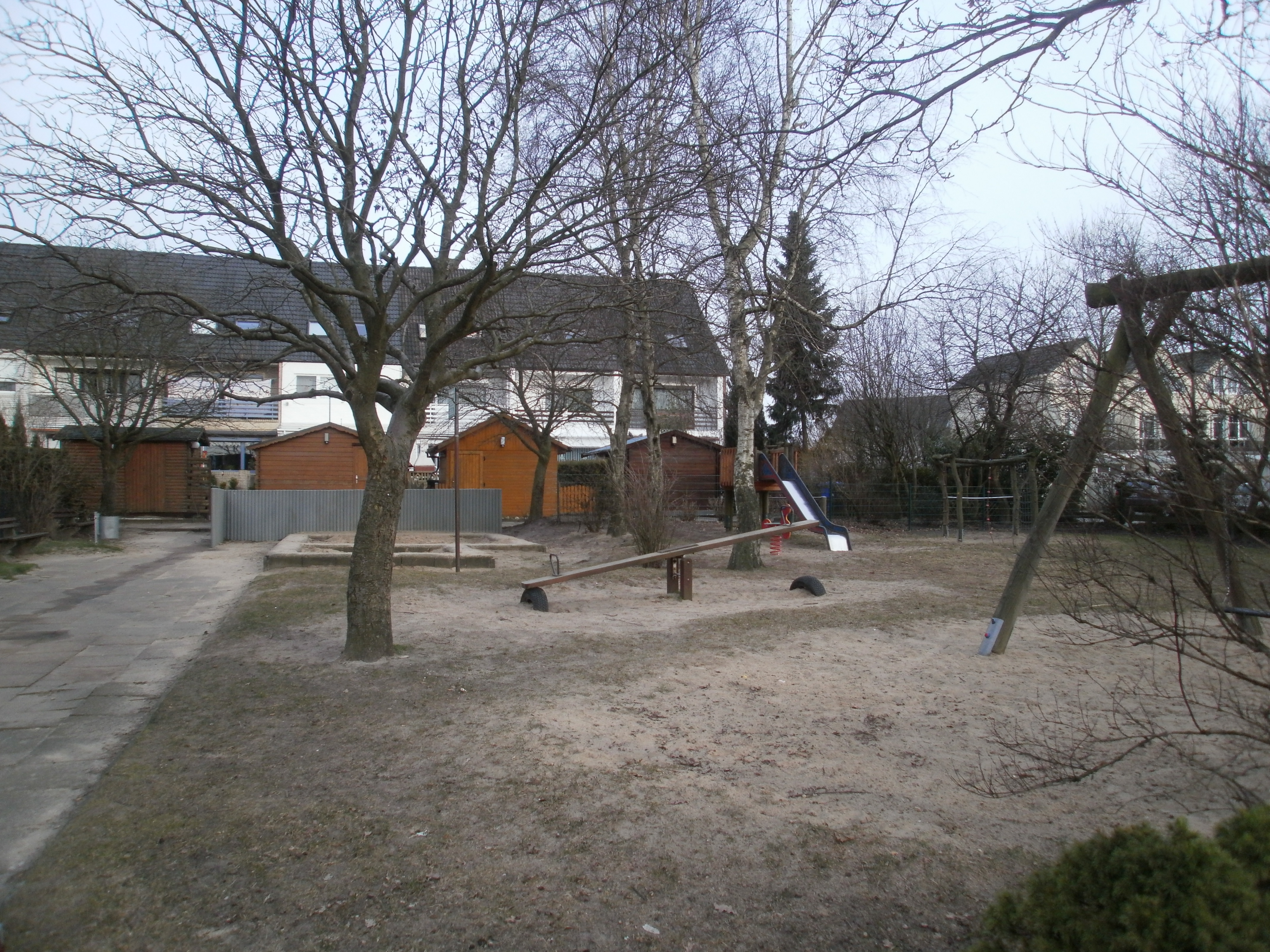
This mundane park in a suburb of Bremerhaven consists of two sandboxes, a slide, a swing-set, and a spring-loaded, rocking, red animal-thing. I can attest to the fun-factor of this playground, as I used it extensively during my toddler years. The equipment has been there since before I arrived on the scene in ’86, so there’s also a sturdy factor involved in the manufacturing of German playground equipment.

Next, we journey to Berlin, a grown-up playground of beautiful graffiti, imposing communist architecture, historical monuments and museums for atrocities, a nightlife catering to the unemployed masses, and somewhat surprisingly child-friendly areas. As I wandered back toward the hostel one afternoon, I came across a hippie paradise for children and their parents. Allow me to demonstrate:

This is a collaborative community project of a park geared toward the non-adult population. It went on for days and had a waffle stand (the deliciousness of which I can vouch for), a community center, an area for smaller children with hills and artsy places to climb, and postings for classes and happenings. When I visited it was still being worked on and I imagine it was an ongoing process of creativity. A man was busy shoving fence posts into the dirt as a passing boy watched, and you could hear all sorts of banging and sawing going on in the back. It was a creative mecca.


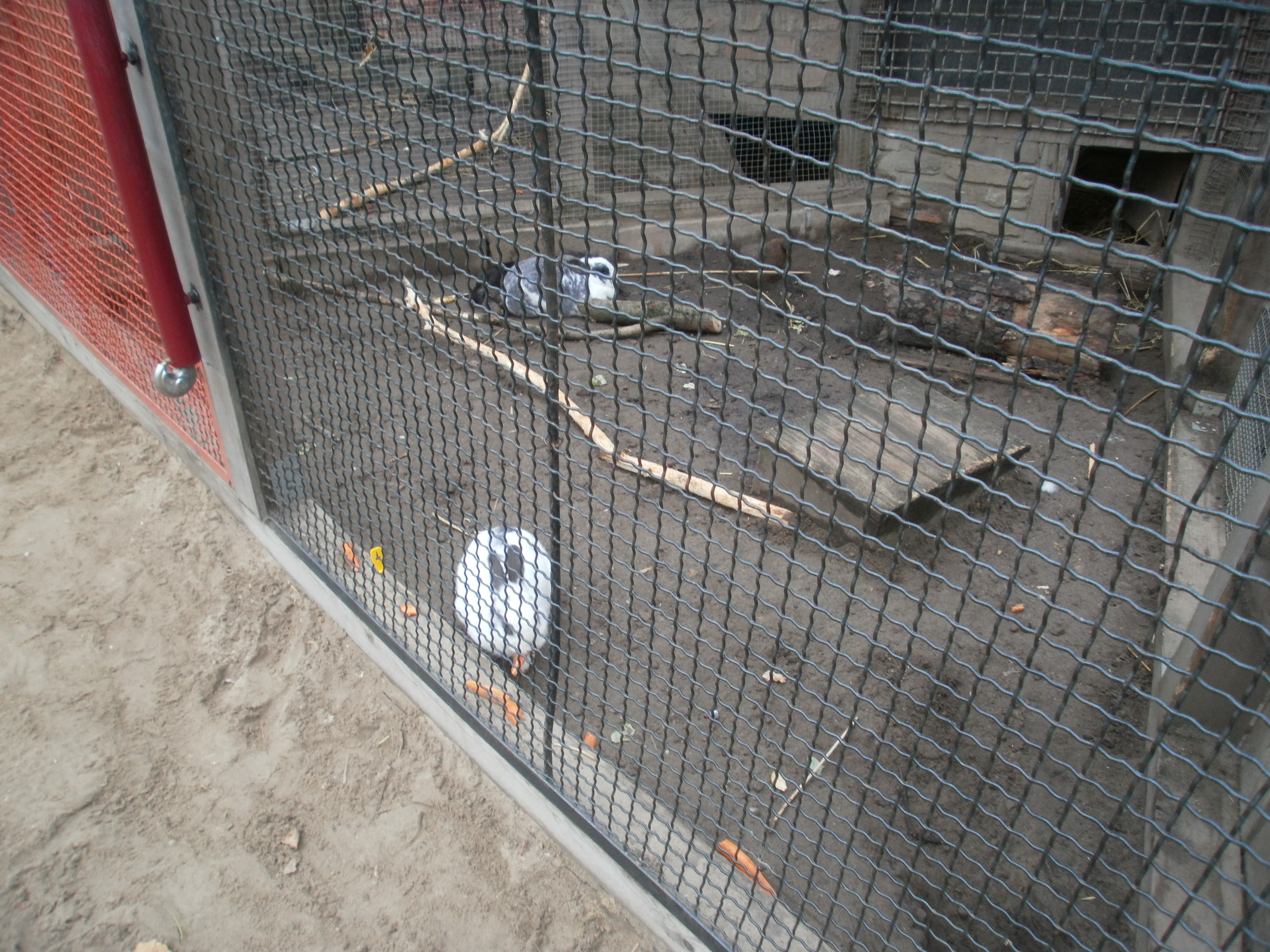
It also had a bunny zoo.


And a water section. In another area, there was a fire pit going and some dangerously steep slides for teenagers.


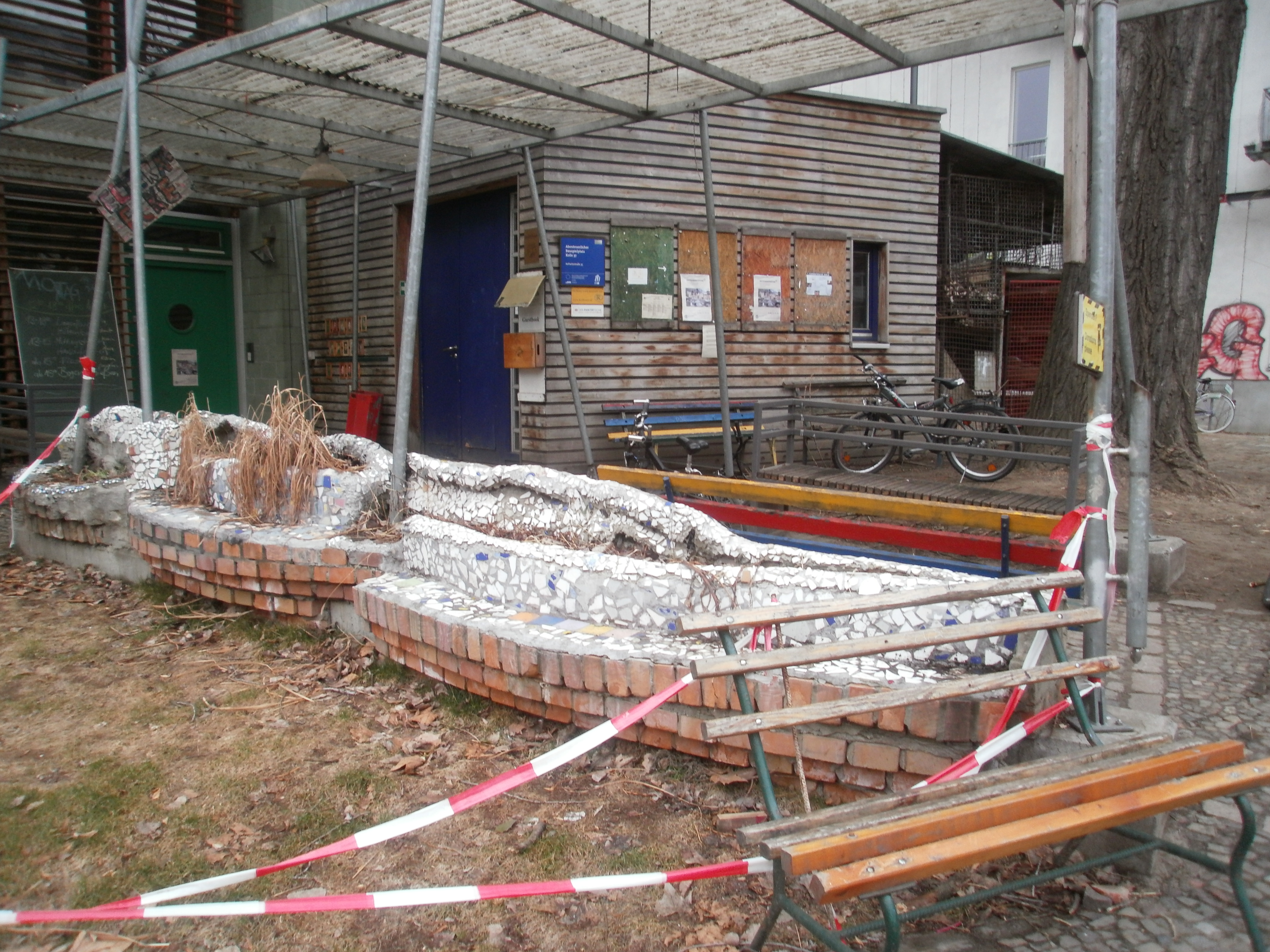
Just look at this amazing community center entrance!

As you can see from the striped tape, it was still under construction…or maybe they were trying to encourage the grass to grow.


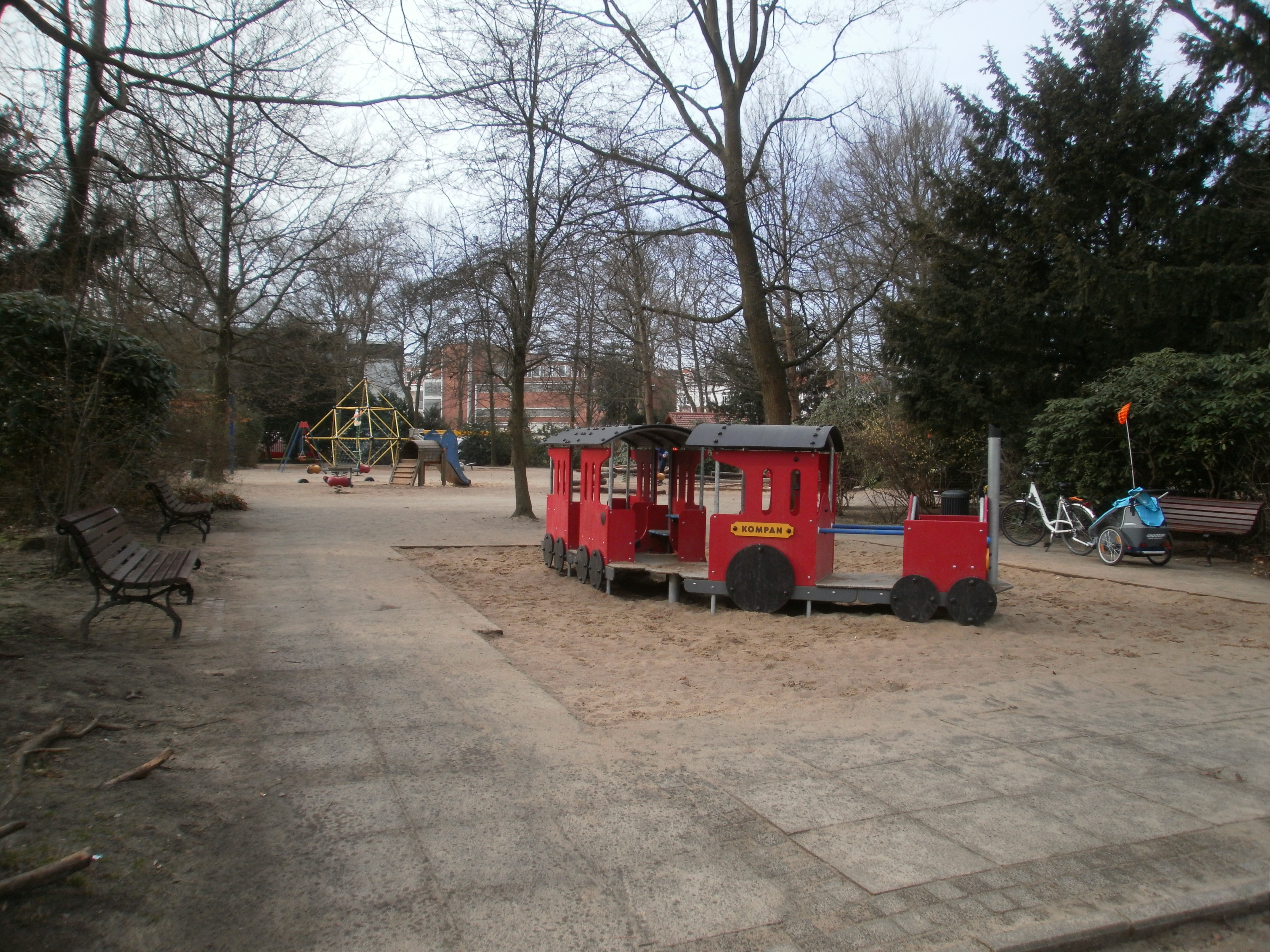
Last, we journey to Bergadorf, a suburb of Hamburg, to what I affectionately and nostalgically refer to as “Dawn’s Park.”

Okay, big deal. This is just a train. It doesn’t event go anywhere.


BAM! Blue elephant slide.


And a wiggily crocodile!


In conclusion, German playgrounds are superior to their U.S. counterparts because they are all like this. Seriously awesome in unique ways. So catch up, America. Don’t make me take my hypothetical offspring elsewhere for their formative years…you may never get them and their future taxes back.

3 Comments

Filed under Art of all Kinds, Contemporary, Sweeping Generalizations

We Cannot Prepare for the Future: The Inescapable Exclusion of Segments of the Population from Society on the Basis of Age*

Can we, the youth, imagine a time when we won’t know what’s going on? Because it’s going to happen.

Culture changes, usually. This is natural. In Western societies, these changes are intertwined with technological “development.” As different technologies and ways of doing things are adopted by society at large, the old are often left behind. Technology kills parts of culture, altering them to nearly unrecognizable states of being. As new technologies are taken up, not everyone can keep up. Those set in their ways are left in the dark, relegated to less participatory modes of existing in society. This happens especially to the older generations. Perhaps it is because they are not as involved in the development of these new technologies, these new modes of societal interaction. Perhaps they have hit maximum capacity when it comes to learning new things, to keeping up with all these changes by reading about them. After all, when you aren’t immersed in these changes, you start to lose the background necessary to comprehend all that comes after. The young inherit the earth, and infuse the society at large with their culture. Hegemonic change disenfranchises the older generations.

This will happen to us, too. Sure, we can keep pace with new technology now, but we won’t always be able to. There comes a time, for most of us, when we decide it’s enough: we have all we need; we can exist in a current mode. And we stop adopting the latest things. When this happens in one’s life cycle varies, but it isn’t a problem at first. Who cares if we don’t understand every little thing our kids or nieces and nephews are talking about? We’re functioning just fine as adults in the world, thanks. We have all we need.

But as we age, we become less able to care for ourselves. We rely on others, younger people who have kept abreast of cultural changes; who know the newest technologies. And their knowledge of the world suddenly overcomes our own: we are no longer in charge of ourselves. We do not know quite how to operate in this brave new world taken over by the young with their new-fangled gadgets and ways of communicating. This loss of control, of knowledge, of feeling like you can exist competently, invades even the smallest, most mundane aspects of culture.

A few years ago, a 90-year-old friend of mine complained that she could no longer do the crossword puzzles in the newspaper because there were so many words she did not know. Words like “iPod.” Trying to explain these words to her and what they represented in the culture just caused her to wave her hand at me, as if to suggest that keeping up was a lost cause. (She could still watch Jeopardy, though, turned up to ear-splitting level.)

At any rate, as members of the current youth generation, the ones employed in sectors that develop and/or use new technologies we feel on top of things. We don’t understand or use every single little gadget that comes out, nor do we understand every nuance of society shifts, but we still feel generally confident about making our way through the world. This confidence allows us to harbor the fantasy that all the changes we are living through are becoming the new status quo–and will remain hegemonic. But at this rate of change–or any rate of change, really, this cannot be the case. There is no way to prepare for how out of touch we will become as we age.

Just look at how things such as the car changed society. Entire infrastructures, ways of procuring food, distances considered manageable, all changed. Changes in media technologies are also a good example. Radio and television changed the way we learned about the world, and how wide a radius of the world we knew about. It changed the ways in which we interacted with people: family, friends, strangers on shows, even. And who on earth was prepared for what the internet has done? Talk about altering the fabric of society with a “simple” medium of communication.

We simply cannot conceive of what’s coming and the changes new ideas and technologies will trigger. The flip-side of this–or at least, a related consequence, is the loss of cultural knowledge. Those of use alive in Western societies today would not know how to operate in a world without natural gas, or telephones, or national voting systems, or any number of things. We do not as a society know how to grow food for our families, wear knickerbockers, or make candles.

Societal and technological changes are constant and mutually constitutive: there is no escape. Not from the loss of culture, from the generational disenfranchisement, from the often sudden incongruity of life experiences. We cannot prepare for how lost we will feel in the midst of future changes. Everything will be different: some things slightly, some things radically. But at least we can count on our grandkids or grand-nieces and grand-nephews rolling their eyes at our ignorant, old-fashioned ways.


*I’d like to extend thanks and partial credit to a friend of mine for originally introducing me to this phenomenon in 2006. Without her, it would not have occupied my thoughts and driven me to write this post.

4 Comments

Filed under Contemporary, Historical, Sweeping Generalizations