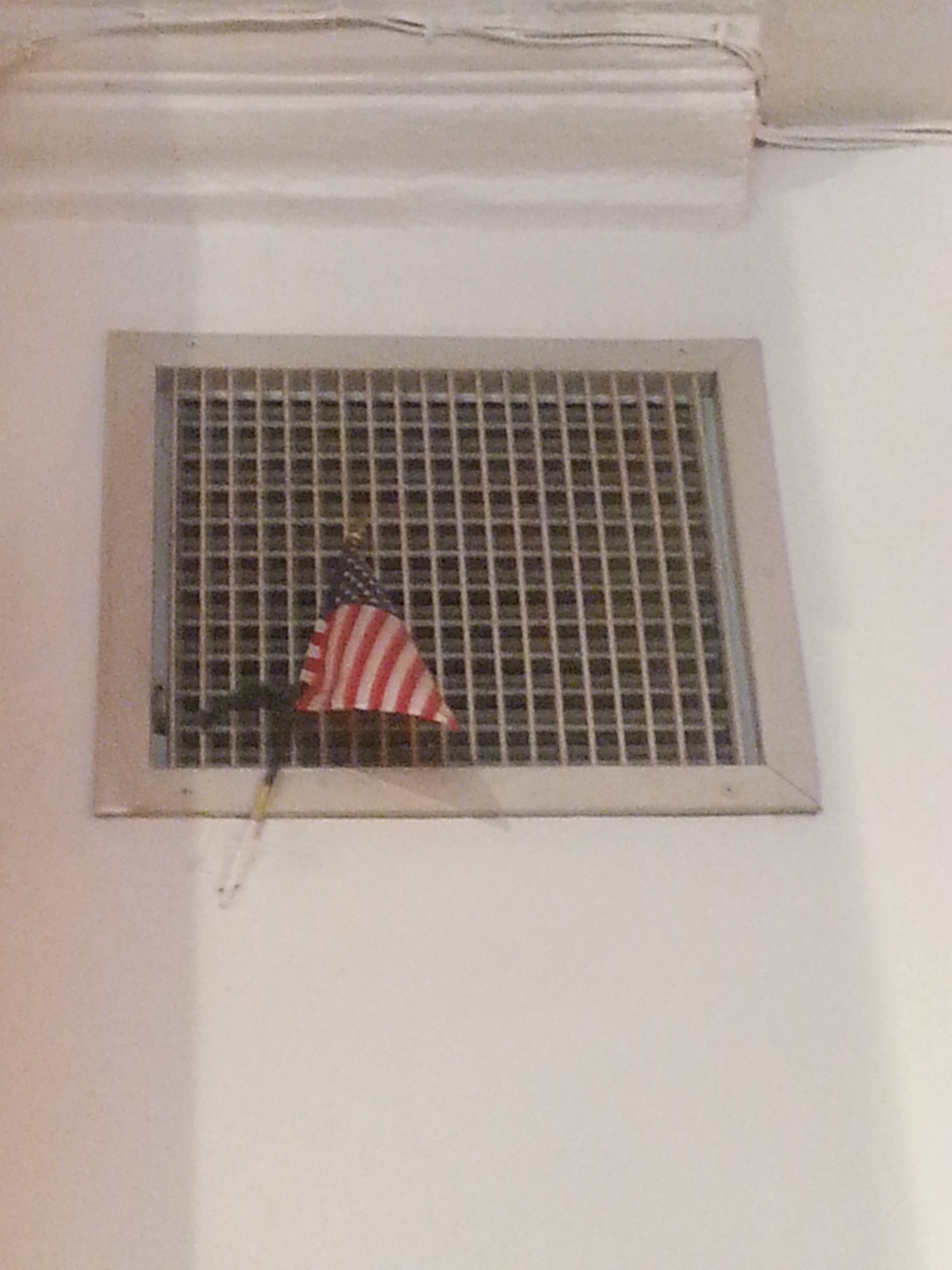
Awaiting a breath
Limping above the grinds
Daily abandon
Obscured by prominence
Sidelined grated greatness
Perhaps to pasture
…..
But fluttered!
Still
Cymbalic
Awaiting a breath
Limping above the grinds
Daily abandon
Obscured by prominence
Sidelined grated greatness
Perhaps to pasture
…..
But fluttered!
Still
Cymbalic
Filed under Wordplay
The two poster-boards shout at passers-by in clearly printed black marker. The signs are duplicates of one another, affixed at angles to a tree on a front lawn. The tree is set back far enough from the curb to not be mistaken for a city tree. Crucially, at the base of this tree is a neatly rounded pile of river rocks. At first glance, there are too many rocks to count. But the owners of the tree seem to keep close tabs on the total.

…make me?
How I long to call on these people in a week or two and find out if they have seen an increase or a decrease in theft since they put up the signs.
For the signs to work as intended–as a deterrent against further theft–a few things have to happen:
That you can see it from the street does not make it public; that you want it does not make it yours; that there are so many to begin with does not change the situation from the owners’ point of view.*
All of this being established, my inclination is that anyone who already feels it is their right to take something from someone else’s lawn will scoff at this feeble attempt to control their behavior and take more rocks just to spite the sign and the passive-aggressive people who wrote it.
I could be wrong. The four steps outlined above may happen. But until these rock owners get a security camera and law enforcement on their side, I do not think their rocks are going to stay put. Not with this futile sign as their only anchor.
* That I took a picture of what these people clearly consider to be their sole property is an ethical grey area, although not getting paid for this piece of writing nudges me more firmly on the “no worries” side of things.
Filed under Contemporary, Power, Wordplay
Community
Sustainability
Accountable
Words I am tired of hearing
Of using
Use made meaning
Made meaningless
Filed under Wordplay

Ode to the Misplaced
Left askew, asunder
Aging allowed
unfettered
Laid bare to the elements
tame
Portal to the past
enduring
Filed under Wordplay
During the elementary school era of childhood in the United States, rhyming carries with it a certain authority. It gives the meaning behind words a type of magical credibility. Speaking in rhymed verse becomes a stand-in for truth-telling, lending the verse the authority it needs to go unchallenged. It can be used as a retort, an argument in and of itself. Rhyming verses are the aphorisms of childhood.
I’m still working through the mechanics of this phenomenon, but I’d be willing to posit that rhyming, and rhyming verses especially, occupy a privileged position in children’s language. Rhyming is a type of authoritative discourse. Consider a few examples:
Each of these sayings are tossed about the playground like so many punch-balls, and even find their ways into the classroom and the mouths of adults who wish to speak on the child’s “level.” To reach them with an authority they will understand, master, and even be able to take ownership of. The easy-peasiness of it, if you will, provides children with a short-hand for the final word on a subject. A commonly held belief among their peers that cannot be challenged.
The rhyming appeals to the authority of truth, because the rhymes have been repeated, are ingrained into the consciousness of the average American school child. They hear these often from one another and the adults on positions of authority within knowledge production and dissemination. Even upon hearing a rhymed phrase for the first time, the fact that the phrase rhymes lends it an aura of believability.
Children repeat these things to one another ad nauseam. The phrases, by virtue of their rhyming qualities, are easier to remember, and thus more likely to be repeated. The repetition itself lends an element of truth–would these phrases be repeated so often if they weren’t true?
And so this becomes, if I remember correctly, an instance of second-order indexicality. The type of speech (rhyming verse) becomes a marker of the very quality from which it derives its power (truth). Or maybe I’ve been away from the text books too long and can’t remember how to use “second-order indexicality” correctly. Perhaps I’ve argued myself into a merry-go-round death-trap.
In any case, something is going on below the surface of these agonizingly trite childhood chants.