On the Superiority of German Playgrounds: A Photo-Essay with a Dubious Argument and One-sided Evidence

During recent travels in Northern Europe (please excuse the pretentiousness) I was taken by the variety and creativity of German playground equipment. It struck me how hideous (okay, so that’s a subjective aesthetic evaluation) and clone-like the playgrounds in the U.S. tend to be. Cookie-cutter jungle-gyms, swing sets, and slides. Not much that feeds the imagination. They are getting better, but they still have a ways to go if the goal is a magical land of outdoor play-time. Feast your eyes on these German examples and see if you don’t agree that we could learn something about incorporating whimsy and general awesomeness into our parks designed for children.

First, a relatively simple one:
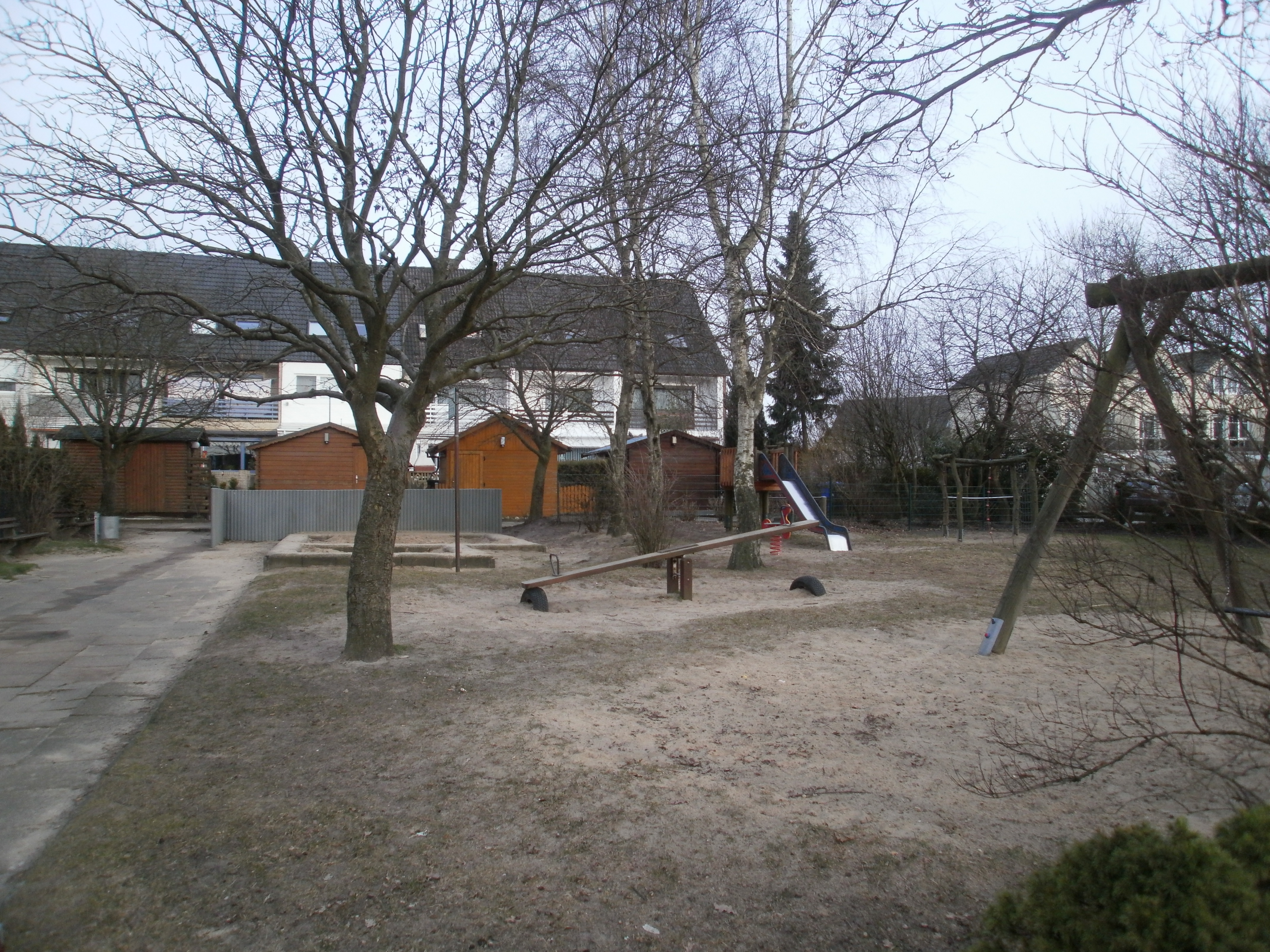
This mundane park in a suburb of Bremerhaven consists of two sandboxes, a slide, a swing-set, and a spring-loaded, rocking, red animal-thing. I can attest to the fun-factor of this playground, as I used it extensively during my toddler years. The equipment has been there since before I arrived on the scene in ’86, so there’s also a sturdy factor involved in the manufacturing of German playground equipment.

Next, we journey to Berlin, a grown-up playground of beautiful graffiti, imposing communist architecture, historical monuments and museums for atrocities, a nightlife catering to the unemployed masses, and somewhat surprisingly child-friendly areas. As I wandered back toward the hostel one afternoon, I came across a hippie paradise for children and their parents. Allow me to demonstrate:

This is a collaborative community project of a park geared toward the non-adult population. It went on for days and had a waffle stand (the deliciousness of which I can vouch for), a community center, an area for smaller children with hills and artsy places to climb, and postings for classes and happenings. When I visited it was still being worked on and I imagine it was an ongoing process of creativity. A man was busy shoving fence posts into the dirt as a passing boy watched, and you could hear all sorts of banging and sawing going on in the back. It was a creative mecca.
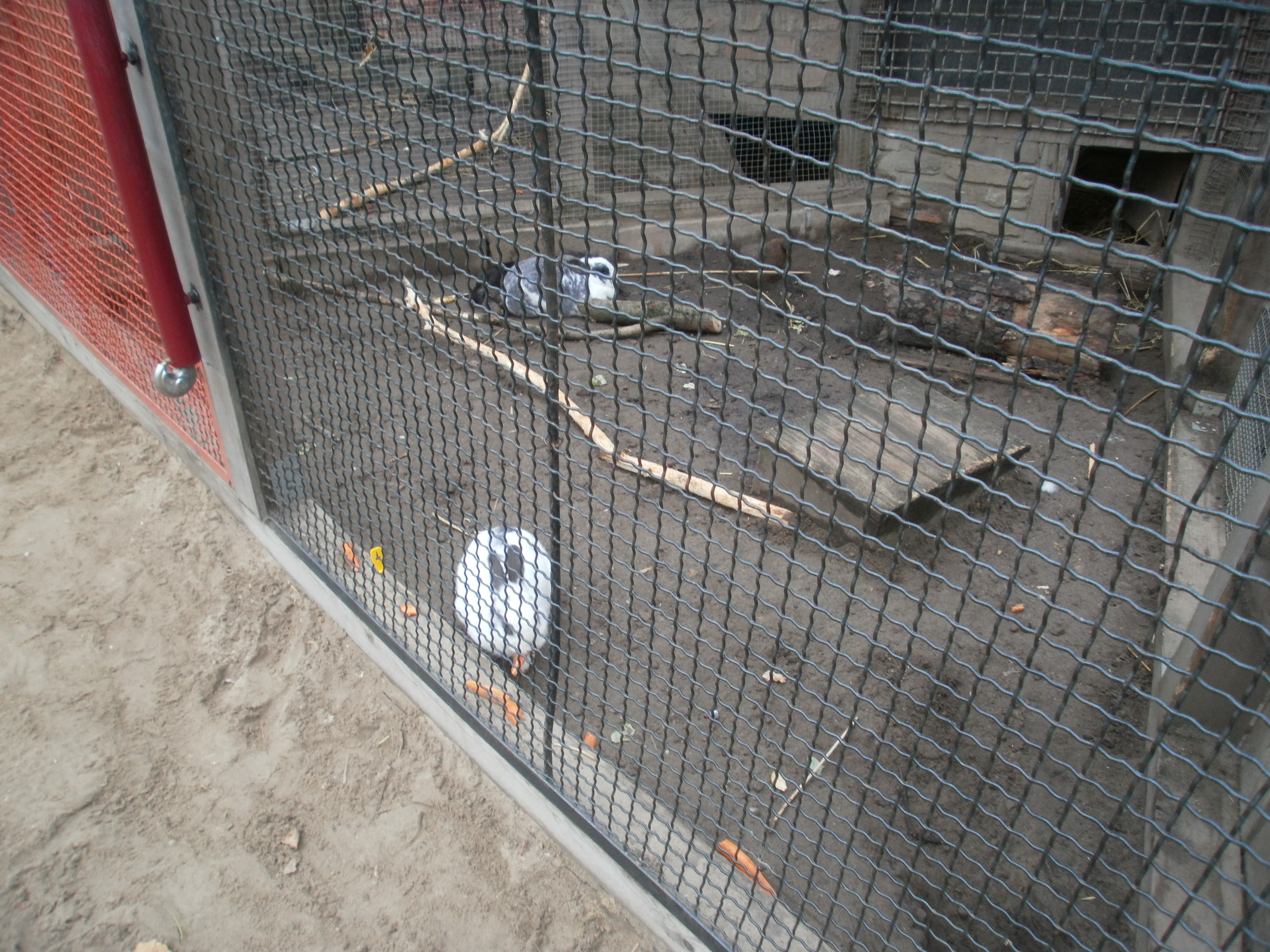


It also had a bunny zoo.


And a water section. In another area, there was a fire pit going and some dangerously steep slides for teenagers.
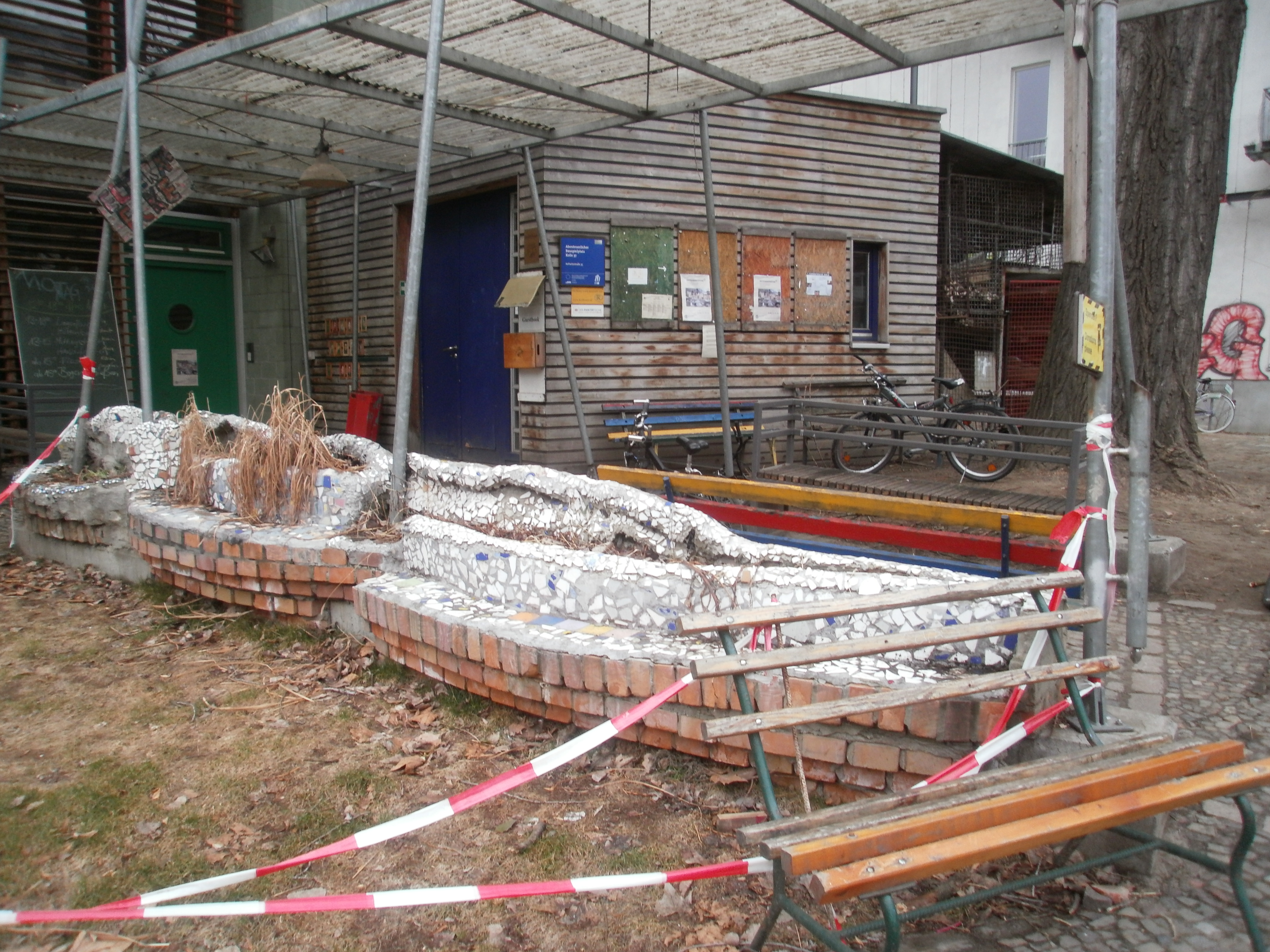


Just look at this amazing community center entrance!

As you can see from the striped tape, it was still under construction…or maybe they were trying to encourage the grass to grow.


Last, we journey to Bergadorf, a suburb of Hamburg, to what I affectionately and nostalgically refer to as “Dawn’s Park.”
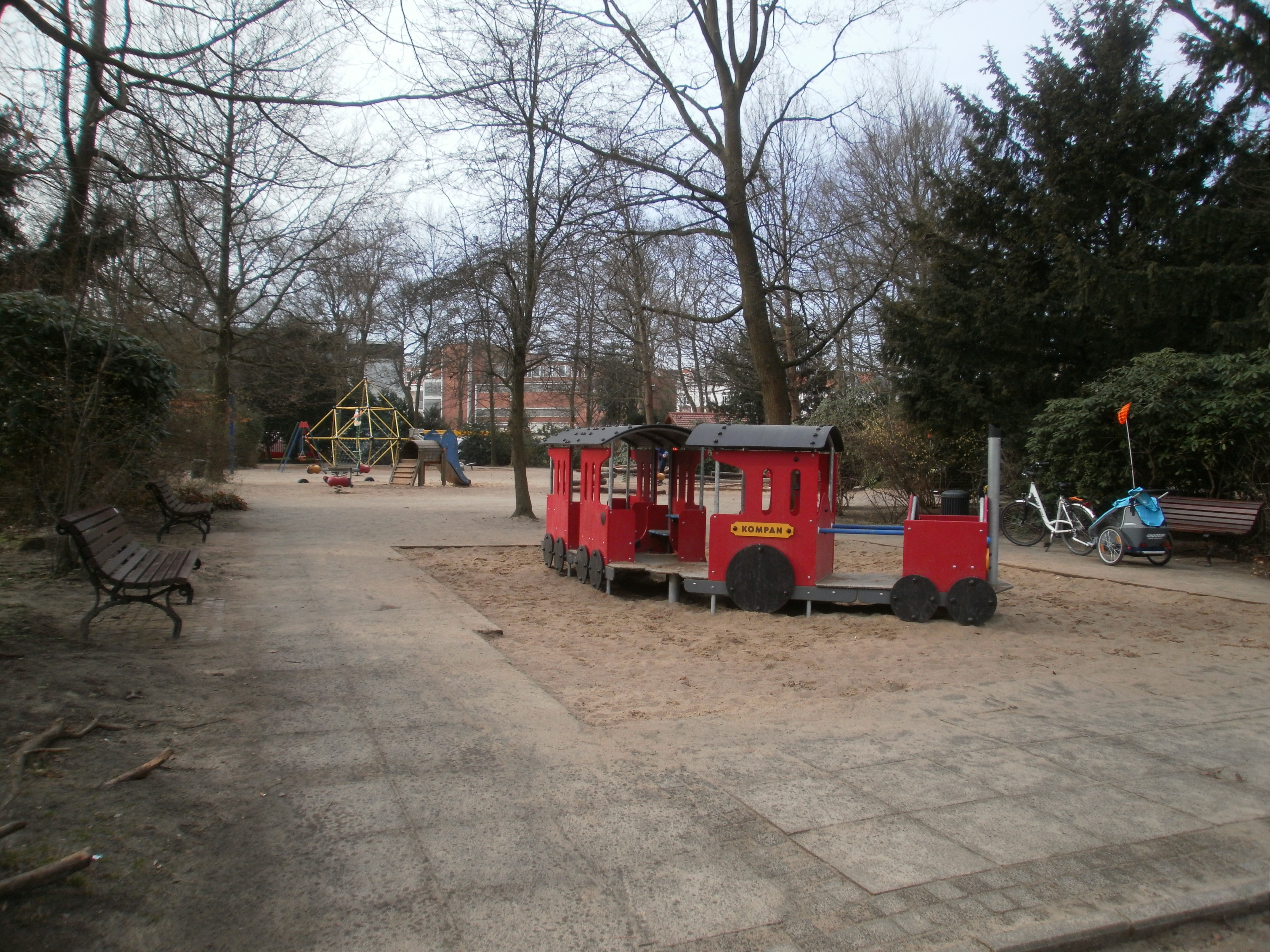
Okay, big deal. This is just a train. It doesn’t event go anywhere.


BAM! Blue elephant slide.


And a wiggily crocodile!


In conclusion, German playgrounds are superior to their U.S. counterparts because they are all like this. Seriously awesome in unique ways. So catch up, America. Don’t make me take my hypothetical offspring elsewhere for their formative years…you may never get them and their future taxes back.


3 Comments

Filed under Art of all Kinds, Contemporary, Sweeping Generalizations

The Cloud: Harbinger of Potential Paradigm Shift

This relates to the previous post about technology and cultural change. In the news lately has been mention of Apple’s jumping onto the cloud bandwagon. As you probably know, this model of data purchase and storage keeps one’s files in the ether, so that they are accessible to you from any device with an internet connection. [cue inspirational music] No longer will our hard-drives be plagued with the tyranny of space-hogging music files! No longer must we contemplate whether or not to download that latest movie or television show! Now, we can just stream them, more or less, anytime we want, because these companies know that we own it.

This has curious implications for society’s concept of ownership. This type of technology uses an ownership-as-access model, rather than the more traditional ownership-as-possession model. Instead of physically having something (however broad the definition of “physically” has become recently because of all this technology), what we now have is access to that something any time we want. This change has been prepared for, I’d argue, because of previous technology like digital music (to replace physically tangible entities such as vinyl records and CDs). We have become accustomed to gradually separating the idea that we have something with the physical existence of that something. And we seem to be accepting it. Perhaps it’s not problematic at all, but I can see scenarios where this (new?) association of ownership with access, rather than possession, could become legally complicated. Or, it may become the case that because ownership is becoming dominantly associated with access, that access will come to stand for–or at least will become associated itself with–possession.

In any case, this seems to be an important, underlying paradigm shift that is not getting quite the attention or discussion that the miraculous new technology itself is getting. Maybe we’re heading toward a more communal model or ownership–where we all together own and help to store the things we consider ourselves to have. But I highly doubt people in America will think of it that way. These music files I’d essentially share with the large companies who store them for us, and the millions of other consumers who have access to them, are mine.

3 Comments

Filed under Contemporary, Technology

We Cannot Prepare for the Future: The Inescapable Exclusion of Segments of the Population from Society on the Basis of Age*

Can we, the youth, imagine a time when we won’t know what’s going on? Because it’s going to happen.

Culture changes, usually. This is natural. In Western societies, these changes are intertwined with technological “development.” As different technologies and ways of doing things are adopted by society at large, the old are often left behind. Technology kills parts of culture, altering them to nearly unrecognizable states of being. As new technologies are taken up, not everyone can keep up. Those set in their ways are left in the dark, relegated to less participatory modes of existing in society. This happens especially to the older generations. Perhaps it is because they are not as involved in the development of these new technologies, these new modes of societal interaction. Perhaps they have hit maximum capacity when it comes to learning new things, to keeping up with all these changes by reading about them. After all, when you aren’t immersed in these changes, you start to lose the background necessary to comprehend all that comes after. The young inherit the earth, and infuse the society at large with their culture. Hegemonic change disenfranchises the older generations.

This will happen to us, too. Sure, we can keep pace with new technology now, but we won’t always be able to. There comes a time, for most of us, when we decide it’s enough: we have all we need; we can exist in a current mode. And we stop adopting the latest things. When this happens in one’s life cycle varies, but it isn’t a problem at first. Who cares if we don’t understand every little thing our kids or nieces and nephews are talking about? We’re functioning just fine as adults in the world, thanks. We have all we need.

But as we age, we become less able to care for ourselves. We rely on others, younger people who have kept abreast of cultural changes; who know the newest technologies. And their knowledge of the world suddenly overcomes our own: we are no longer in charge of ourselves. We do not know quite how to operate in this brave new world taken over by the young with their new-fangled gadgets and ways of communicating. This loss of control, of knowledge, of feeling like you can exist competently, invades even the smallest, most mundane aspects of culture.

A few years ago, a 90-year-old friend of mine complained that she could no longer do the crossword puzzles in the newspaper because there were so many words she did not know. Words like “iPod.” Trying to explain these words to her and what they represented in the culture just caused her to wave her hand at me, as if to suggest that keeping up was a lost cause. (She could still watch Jeopardy, though, turned up to ear-splitting level.)

At any rate, as members of the current youth generation, the ones employed in sectors that develop and/or use new technologies we feel on top of things. We don’t understand or use every single little gadget that comes out, nor do we understand every nuance of society shifts, but we still feel generally confident about making our way through the world. This confidence allows us to harbor the fantasy that all the changes we are living through are becoming the new status quo–and will remain hegemonic. But at this rate of change–or any rate of change, really, this cannot be the case. There is no way to prepare for how out of touch we will become as we age.

Just look at how things such as the car changed society. Entire infrastructures, ways of procuring food, distances considered manageable, all changed. Changes in media technologies are also a good example. Radio and television changed the way we learned about the world, and how wide a radius of the world we knew about. It changed the ways in which we interacted with people: family, friends, strangers on shows, even. And who on earth was prepared for what the internet has done? Talk about altering the fabric of society with a “simple” medium of communication.

We simply cannot conceive of what’s coming and the changes new ideas and technologies will trigger. The flip-side of this–or at least, a related consequence, is the loss of cultural knowledge. Those of use alive in Western societies today would not know how to operate in a world without natural gas, or telephones, or national voting systems, or any number of things. We do not as a society know how to grow food for our families, wear knickerbockers, or make candles.

Societal and technological changes are constant and mutually constitutive: there is no escape. Not from the loss of culture, from the generational disenfranchisement, from the often sudden incongruity of life experiences. We cannot prepare for how lost we will feel in the midst of future changes. Everything will be different: some things slightly, some things radically. But at least we can count on our grandkids or grand-nieces and grand-nephews rolling their eyes at our ignorant, old-fashioned ways.


*I’d like to extend thanks and partial credit to a friend of mine for originally introducing me to this phenomenon in 2006. Without her, it would not have occupied my thoughts and driven me to write this post.

4 Comments

Filed under Contemporary, Historical, Sweeping Generalizations

Sartorial Bovinity: Quick, What’s the Opposite of a Monkey Suit?

Hospital of Make Believe: Bear and Monkey Expected to Make Full Recovery

These stuffed toys grace the display area of a non-profit that deals in durable medical equipment. They demonstrate the friendly, benign nature of a standard hospital bed, serving to cheer up the often more grim realities associated with such equipment. The monkey, especially, adds a note of whimsy by being dressed up as a cow. There is a (small?) trend in the world of stuffed toys to dress one animal species in the “suit” of another. This is generally received to be “cute,” but one wonders what other meanings and implications such sartorial animality has.

Perhaps it is cute because it is odd…odd to see one type of the general category of “animal” pretending to be another type. When humans pretend to be other animals, there is a different reaction, although perhaps I should compare this with humanoid dolls in animal “clothing.” In which case, it is seen to be cute, as well. My point was going to be that humans in Western culture see themselves as set apart from the general category of “animal,” which lumps together all others. It is just difficult to trace out the various categorical intersections, interstices, and radical separations without delving into extreme fieldwork that involves thousands of participants. So I will leave it at this:

What do you think of the monkey above, of animals pretending to be other animals, and of representations of animals (especially those used in play) being dressed up as other animals? And finally, is the other animal necessarily also Other?

Leave a comment

Filed under Animals, Bovinity Infinity, Contemporary

Profitable Discourse: NBC’s “Education Nation”

There have been quite a few ads for this new segment/series on NBC stations. While conversation about the state of education is great, what struck me was that this feels like a corporation seizing upon a sexy topic–one of concern for many citizens–and capitalizing on it. After all, news conglomerates are businesses. For-profit businesses. To get advertisers to buy space, they have to ensure that people will consume the news they disseminate. Hey, people seem to be worried about education–let’s create a series, website, and blog that speaks to those concerns.  That’ll get them to watch! And how handy: a catchy, rhyming title. They’ll associate our name, our logo, our news brand, with what matters to them! 

Discourse (much of which has been created or at least fueled by the mass-media, let’s not forget) is yet another opportunity to build the brand. By associating NBC with what is perceived to be a social good–public education–capitalism wins again. These ongoing, mediated conversations promise to “make a difference” to viewers and participators…and to the corporation’s pocketbook. It’s profit masquerading as a practical response to national discourse and those topics that are latched onto in waves of hand-wringing and fist-clenching. Capitalism in the trappings of populism.

To piggy-back on the idea of public discourse, the fact that national news corporations now deal with broad topics of concern is symptomatic of how our society interacts. We think of ourselves as a nation. Locality is still there, but we pay overwhelming attention to things that are perceived to concern our state, our country as a whole. The village we belong to has grown. Our community has become televised, and our neighborhood is now online. These are gross over-generalizations, of course, and it would be worth exploring whether or not this move to exponentially larger circles of community and the ways in which they are mediated is mirrored by a refocusing on ever-smaller local identities, such as towns and neighborhoods. As we strengthen our national identity, do we simultaneously cling to the micro-concerns of our local identity?

Either way, news corporations have us covered. Oh boy, are we covered. They know what we care about, what will make us watch, and they know how to get us to care about things, as well. Perhaps this move shouldn’t be derided too much, as it probably will lead to productive conversations about how to improve the educational system, whether those conversations lead to actual positive changes or not. It’ll be interesting to monitor this series and its partner website to see what NBC decides to focus on. And it’s always worth looking critically at things from different perspectives, especially if they seem oddly benevolent.

4 Comments

Filed under Contemporary, Media